
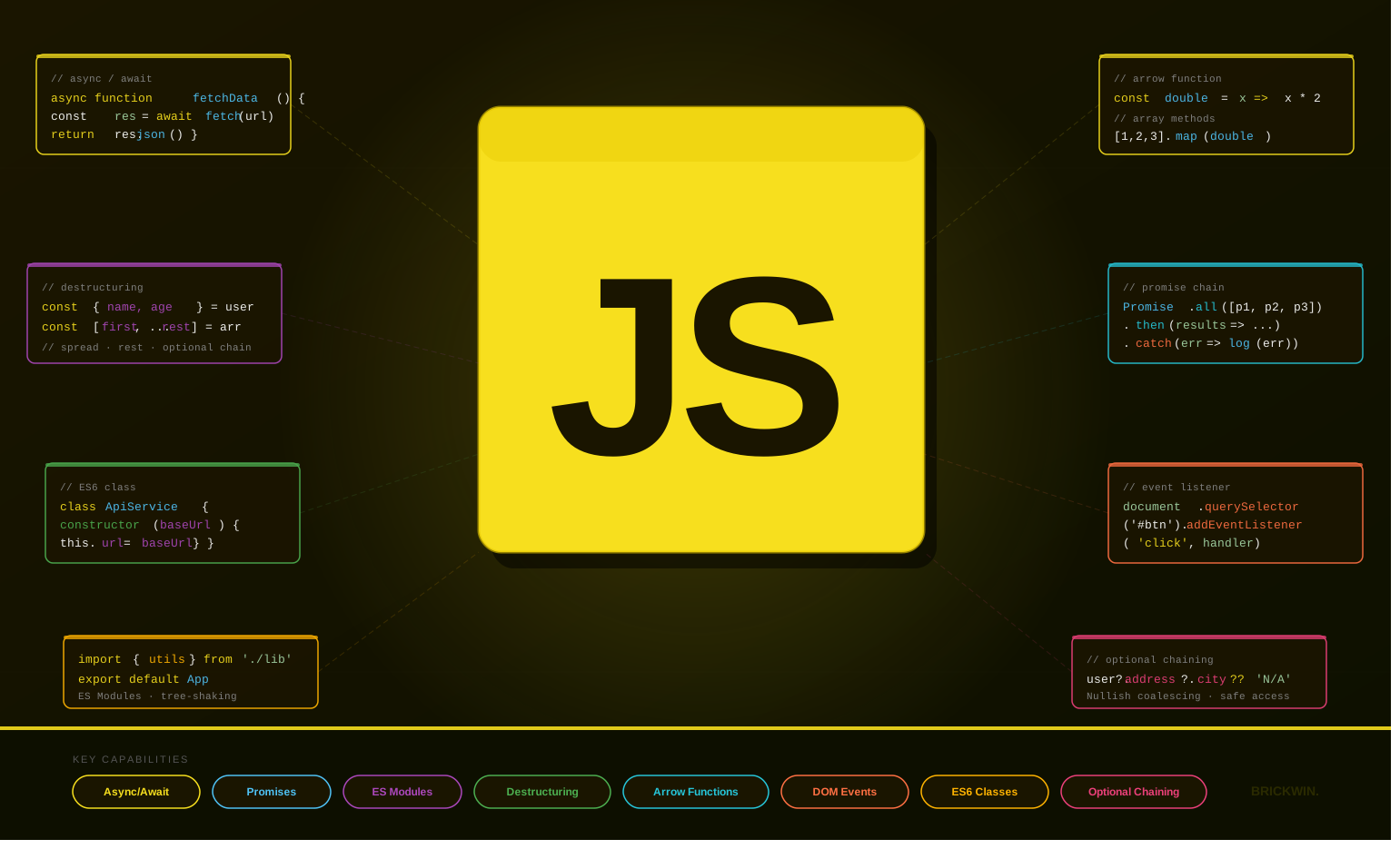
If HTML is the structure and CSS is the appearance, JavaScript is the behaviour. It's what happens when a user clicks a button, fills in a form, or scrolls down a page. It's what fetches data from a server without reloading the page. It's what updates the interface in real time when something changes. Without JavaScript, a web product is a static document. With it, it becomes a working application.
Any application that can be written in JavaScript, will eventually be written in JavaScript.
JavaScript runs in the browser - which means it runs on the user's device, directly, without going to a server first. That's what makes interactions feel instant. A dropdown opens immediately. A form validates before you submit it. A search filters results as you type. All of this happens locally, in milliseconds, because the code is already on the device. When data needs to come from a server, JavaScript handles that too - fetching it in the background while the user keeps using the page, then updating only the part of the interface that needs to change.
JavaScript also runs on the server through Node.js, which means the same language covers both sides of a web application. Our engineers don't need to switch mental models between frontend and backend - the language, the patterns, and the tooling are familiar on both sides. This reduces handoff friction, speeds up development, and means a smaller team can cover more ground without quality suffering.
What this means for your product:
- Interactions that feel instant because they happen on the device
- Data that loads in the background without refreshing the page
- Forms that validate in real time before submission
- One language across frontend and backend - less complexity, faster delivery
Chips:
ES6+ · Async/Await · DOM Manipulation · Fetch API · Modules · TypeScript · Node.js

